Buy manpowerquiz.eu ?
We are moving the project
manpowerquiz.eu .
Are you interested in purchasing the domain
manpowerquiz.eu ?
domain@kv-gmbh.de · 0541-91531010
Buy manpowerquiz.eu ?
What is the biserial correlation coefficient and the phi coefficient and the chi coefficient?
The biserial correlation coefficient is a measure of the strength and direction of the relationship between a continuous variable and a dichotomous variable. It is calculated when one variable is continuous and the other is dichotomous. The phi coefficient is a measure of association between two dichotomous variables. It is calculated using a 2x2 contingency table and ranges from -1 to 1, with 0 indicating no association and 1 indicating a perfect association. The chi coefficient is a measure of association between two dichotomous variables, similar to the phi coefficient. It is also calculated using a 2x2 contingency table and ranges from -1 to 1, with 0 indicating no association and 1 indicating a perfect association. **
Which correlation coefficient?
The correlation coefficient is a statistical measure that quantifies the strength and direction of a relationship between two variables. It ranges from -1 to 1, with -1 indicating a perfect negative correlation, 0 indicating no correlation, and 1 indicating a perfect positive correlation. The correlation coefficient is used to determine how closely the two variables are related and can help in making predictions or understanding the nature of the relationship between them. **
Similar search terms for Coefficient
Top-Angebote
Products related to Coefficient:
-
Learning Resources All About Me Family Counters Set of 72 - 72 Colorful Counters for Early Math Skills and Social Skills DevelopmentIntroducing the Learning Resources All About Me Family Counters Set of 72, a fun and educational tool designed to spark imagination and creativity in young learners. This vibrant set features a delightful array of family members, including parents, grandparents, and children, ideal for counting, sorting, and imaginative play. The set includes 72 colorful counters that are perfectly sized for little hands, making learning engaging and fun. The counters promote early math skills by encouraging counting, patterning, and sorting through playful activities. They also help develop social skills by fostering conversations about family dynamics and relationships. The All About Me Family Counters are suitable for a variety of settings, including home play, classroom activities, and birthday gifts. They are a great addition to any toy collection.18,69 £*Shipping: 3,95 £Secure redirect to the provider
-
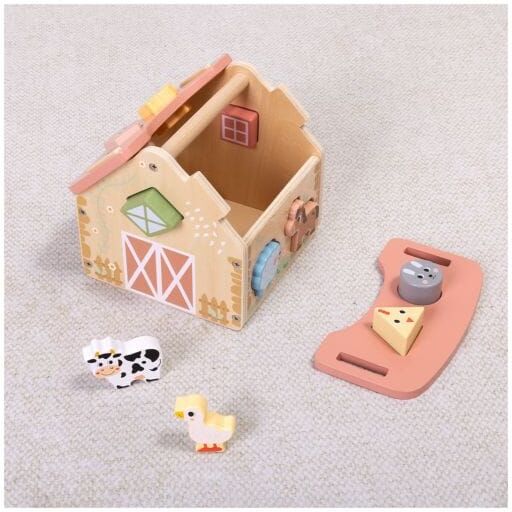
Tooky Toys Wooden Shape Sorter Barn - Toddler Toy for 3-4 Years - Fine Motor Skills DevelopmentWooden shape sorter barn designed for toddlers to practice spatial reasoning and fine motor control. Made from dense hardwood with sanded edges and low-VOC treatment. Includes chunky geometric blocks sized for small-hand grip strength. Each slot aligns with a specific block shape, reducing slippage. Smooth finish wipes clean after crayon marks or snack spills. Sturdy frame maintains integrity through stacking and drops. Reinforces visual discrimination and geometry vocabulary.11,08 £*Shipping: 3,95 £Secure redirect to the provider
-
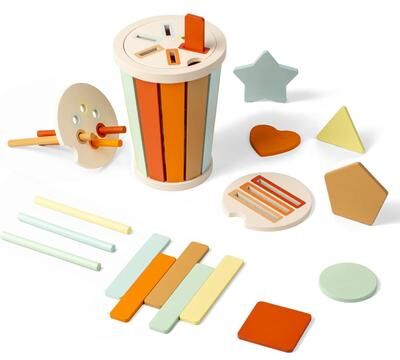
Youfap Market Montessori Wooden Shape Sorting Toy For Toddlers, Color Matching & Fine Motor Skills Development bGive your toddler a head start in learning with this Montessori wooden shape sorting toy. Designed for young learners, it helps build fine motor skills through colorful and interactive matching games. Perfect for kids ages 3 and up, this educational...64,97 $*Shipping: 0,00 $Secure redirect to the provider
-
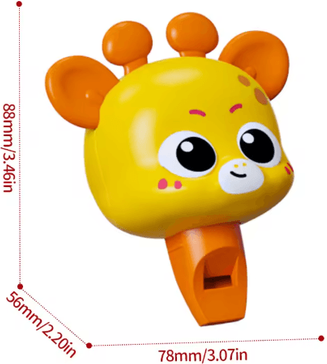
Inspire Picks Interactive Giraffe Suction Cup Toy Multifunctional Sensory Learning And Motor Skills Development Toy whistleEncourage handson learning and playful discovery with this interactive giraffe toy designed for growing minds. Featuring a strong suction cup base, it easily attaches to smooth surfaces for stable, engaging play at home or on the go. Made from safe,...34,93 $*Shipping: 0,00 $Secure redirect to the provider

-
What is the binomial coefficient?
The binomial coefficient, denoted as ${n \choose k}$, represents the number of ways to choose k elements from a set of n elements without regard to the order of selection. It is calculated using the formula ${n \choose k} = \frac{n!}{k!(n-k)!}$, where n! denotes the factorial of n. The binomial coefficient is commonly used in combinatorics and probability theory to calculate the number of combinations or possibilities in a given scenario. **
-
What is the multiplication coefficient?
The multiplication coefficient is a number that represents the factor by which a quantity is multiplied. It is used to scale or increase the value of a quantity by a certain amount. For example, if the multiplication coefficient is 2, then the quantity is doubled. The multiplication coefficient is often used in mathematical equations and calculations to represent the relationship between different quantities. **
-
What is the Lusor coefficient?
The Lusor coefficient is a measure of the ability of a fluid to carry sediment. It is used in the field of sediment transport to quantify the sediment-carrying capacity of a fluid, such as water or air. The coefficient takes into account factors such as the size and density of the sediment particles, as well as the velocity and viscosity of the fluid. A higher Lusor coefficient indicates a greater ability of the fluid to transport sediment. **
-
What is the validity coefficient?
The validity coefficient is a statistical measure that quantifies the relationship between a predictor (such as a test or assessment) and a criterion (such as job performance or academic achievement). It indicates the degree to which the predictor is able to accurately predict the criterion. A higher validity coefficient suggests a stronger relationship between the predictor and the criterion, indicating that the predictor is more effective in predicting the criterion. Validity coefficients are commonly used in the field of psychometrics and are important for evaluating the effectiveness of selection tools and assessments. **
What is a Gini coefficient?
A Gini coefficient is a measure of income inequality within a population. It is calculated based on the distribution of income or wealth among individuals or households in a given country or region. The coefficient ranges from 0 to 1, with 0 representing perfect equality (everyone has the same income) and 1 representing perfect inequality (one person has all the income). A higher Gini coefficient indicates greater income inequality, while a lower coefficient indicates more equal distribution of income. **
How is the Gini coefficient calculated?
The Gini coefficient is calculated by plotting the cumulative distribution of income or wealth against the cumulative share of the population. The coefficient is then derived by dividing the area between the line of perfect equality (where everyone has the same income or wealth) and the actual distribution curve by the total area under the line of perfect equality. The resulting value ranges from 0 (perfect equality) to 1 (perfect inequality). **
Top-Angebote
Products related to Coefficient:
-
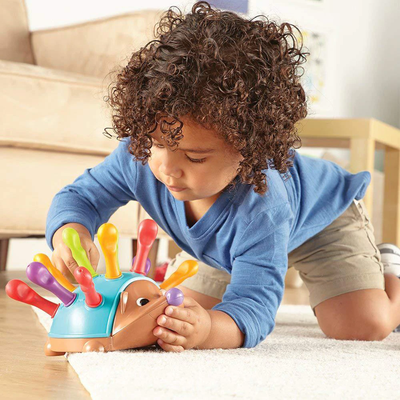
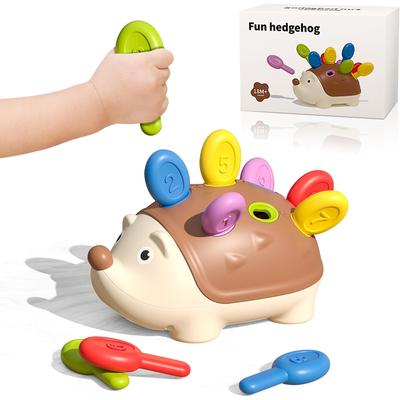
Playful Picks Montessori Hedgehog Color Sorting Educational Toddler Toy For Fine Motor Skills Development Montessori Hedgehog Color Sorting Educational Toddler Toy For Fine Motor Skills DevelopmentTurn early learning into a joyful daily adventure with a toy designed to spark curiosity and growth. The Montessori hedgehog toy is thoughtfully created for toddlers aged 13, helping them explore colors, counting, and coordination through handson...24,97 $*Shipping: 0,00 $Secure redirect to the provider
-
Tiny Tots Teens Trends Montessori Educational Toy, Hedgehog Fine Motor Skills, Toddler Counting, Sensory Development Montessori Educational Toy, Hedgehog Fine Motor Skills, Toddler Counting, Sensory DevelopmentHedgehog Montessori Educational Toy is a delightful and engaging learning tool designed to help toddlers develop essential fine motor skills, improve their concentration, and enhance sensory development. This toy promotes handson learning through...59,97 $*Shipping: 0,00 $Secure redirect to the provider
-
Learning Resources All About Me Family Counters Set of 72 - 72 Colorful Counters for Early Math Skills and Social Skills DevelopmentIntroducing the Learning Resources All About Me Family Counters Set of 72, a fun and educational tool designed to spark imagination and creativity in young learners. This vibrant set features a delightful array of family members, including parents, grandparents, and children, ideal for counting, sorting, and imaginative play. The set includes 72 colorful counters that are perfectly sized for little hands, making learning engaging and fun. The counters promote early math skills by encouraging counting, patterning, and sorting through playful activities. They also help develop social skills by fostering conversations about family dynamics and relationships. The All About Me Family Counters are suitable for a variety of settings, including home play, classroom activities, and birthday gifts. They are a great addition to any toy collection.18,69 £*Shipping: 3,95 £Secure redirect to the provider
-
Tooky Toys Wooden Shape Sorter Barn - Toddler Toy for 3-4 Years - Fine Motor Skills DevelopmentWooden shape sorter barn designed for toddlers to practice spatial reasoning and fine motor control. Made from dense hardwood with sanded edges and low-VOC treatment. Includes chunky geometric blocks sized for small-hand grip strength. Each slot aligns with a specific block shape, reducing slippage. Smooth finish wipes clean after crayon marks or snack spills. Sturdy frame maintains integrity through stacking and drops. Reinforces visual discrimination and geometry vocabulary.11,08 £*Shipping: 3,95 £Secure redirect to the provider
-
What is the biserial correlation coefficient and the phi coefficient and the chi coefficient?
The biserial correlation coefficient is a measure of the strength and direction of the relationship between a continuous variable and a dichotomous variable. It is calculated when one variable is continuous and the other is dichotomous. The phi coefficient is a measure of association between two dichotomous variables. It is calculated using a 2x2 contingency table and ranges from -1 to 1, with 0 indicating no association and 1 indicating a perfect association. The chi coefficient is a measure of association between two dichotomous variables, similar to the phi coefficient. It is also calculated using a 2x2 contingency table and ranges from -1 to 1, with 0 indicating no association and 1 indicating a perfect association. **
-
Which correlation coefficient?
The correlation coefficient is a statistical measure that quantifies the strength and direction of a relationship between two variables. It ranges from -1 to 1, with -1 indicating a perfect negative correlation, 0 indicating no correlation, and 1 indicating a perfect positive correlation. The correlation coefficient is used to determine how closely the two variables are related and can help in making predictions or understanding the nature of the relationship between them. **
-
What is the binomial coefficient?
The binomial coefficient, denoted as ${n \choose k}$, represents the number of ways to choose k elements from a set of n elements without regard to the order of selection. It is calculated using the formula ${n \choose k} = \frac{n!}{k!(n-k)!}$, where n! denotes the factorial of n. The binomial coefficient is commonly used in combinatorics and probability theory to calculate the number of combinations or possibilities in a given scenario. **
-
What is the multiplication coefficient?
The multiplication coefficient is a number that represents the factor by which a quantity is multiplied. It is used to scale or increase the value of a quantity by a certain amount. For example, if the multiplication coefficient is 2, then the quantity is doubled. The multiplication coefficient is often used in mathematical equations and calculations to represent the relationship between different quantities. **
Similar search terms for Coefficient
-
Youfap Market Montessori Wooden Shape Sorting Toy For Toddlers, Color Matching & Fine Motor Skills Development bGive your toddler a head start in learning with this Montessori wooden shape sorting toy. Designed for young learners, it helps build fine motor skills through colorful and interactive matching games. Perfect for kids ages 3 and up, this educational...64,97 $*Shipping: 0,00 $Secure redirect to the provider
-
Inspire Picks Interactive Giraffe Suction Cup Toy Multifunctional Sensory Learning And Motor Skills Development Toy whistleEncourage handson learning and playful discovery with this interactive giraffe toy designed for growing minds. Featuring a strong suction cup base, it easily attaches to smooth surfaces for stable, engaging play at home or on the go. Made from safe,...34,93 $*Shipping: 0,00 $Secure redirect to the provider
-
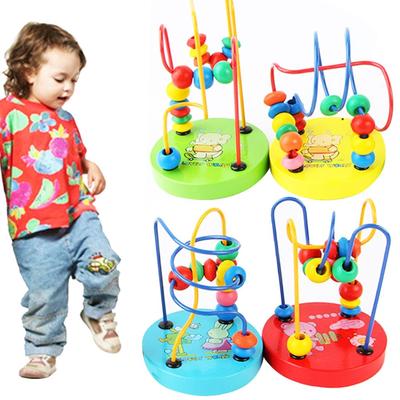
Snug & Styled Wooden Bead Maze Toy For Babies Educational Infant Motor Skills & Sensory Development Toy mnczj 2365Early childhood is the perfect stage to build curiosity, coordination, and cognitive growth through play. The wooden bead maze toy is thoughtfully designed to engage babies and toddlers in handson learning while keeping them entertained. As a safe...39,97 $*Shipping: 0,00 $Secure redirect to the provider
-
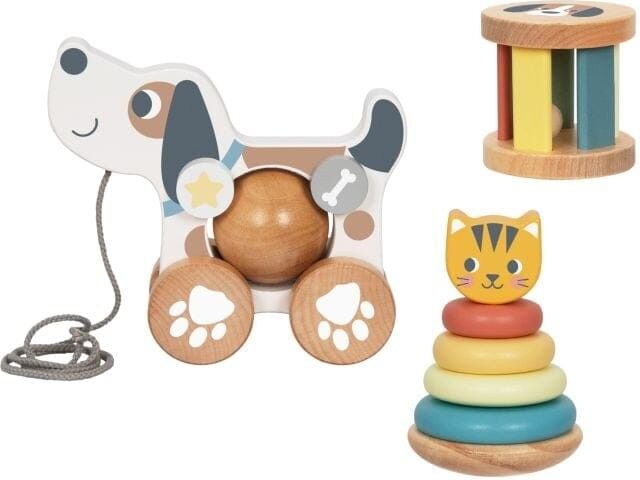
Tooky Toys Wooden 3 in 1 Gift Box - Develops Fine Motor Skills & Boosts Cognitive Development for KidsCompact toy with playful puppy design offering spinning, stacking, shape sorting, and pulling challenges. Solid wooden construction for durability and timeless appeal.18,47 £*Shipping: 3,95 £Secure redirect to the provider
-
What is the Lusor coefficient?
The Lusor coefficient is a measure of the ability of a fluid to carry sediment. It is used in the field of sediment transport to quantify the sediment-carrying capacity of a fluid, such as water or air. The coefficient takes into account factors such as the size and density of the sediment particles, as well as the velocity and viscosity of the fluid. A higher Lusor coefficient indicates a greater ability of the fluid to transport sediment. **
-
What is the validity coefficient?
The validity coefficient is a statistical measure that quantifies the relationship between a predictor (such as a test or assessment) and a criterion (such as job performance or academic achievement). It indicates the degree to which the predictor is able to accurately predict the criterion. A higher validity coefficient suggests a stronger relationship between the predictor and the criterion, indicating that the predictor is more effective in predicting the criterion. Validity coefficients are commonly used in the field of psychometrics and are important for evaluating the effectiveness of selection tools and assessments. **
-
What is a Gini coefficient?
A Gini coefficient is a measure of income inequality within a population. It is calculated based on the distribution of income or wealth among individuals or households in a given country or region. The coefficient ranges from 0 to 1, with 0 representing perfect equality (everyone has the same income) and 1 representing perfect inequality (one person has all the income). A higher Gini coefficient indicates greater income inequality, while a lower coefficient indicates more equal distribution of income. **
-
How is the Gini coefficient calculated?
The Gini coefficient is calculated by plotting the cumulative distribution of income or wealth against the cumulative share of the population. The coefficient is then derived by dividing the area between the line of perfect equality (where everyone has the same income or wealth) and the actual distribution curve by the total area under the line of perfect equality. The resulting value ranges from 0 (perfect equality) to 1 (perfect inequality). **
* All prices are inclusive of VAT and, if applicable, plus shipping costs. The offer information is based on the details provided by the respective shop and is updated through automated processes. Real-time updates do not occur, so deviations can occur in individual cases. ** Note: Parts of this content were created by AI.