Buy manpowerquiz.eu ?
We are moving the project
manpowerquiz.eu .
Are you interested in purchasing the domain
manpowerquiz.eu ?
domain@kv-gmbh.de · 0541-91531010
Buy manpowerquiz.eu ?
Which cells have chloroplasts?
Chloroplasts are found in plant cells and some algae cells. **
How are chloroplasts structured?
Chloroplasts are double-membrane organelles found in plant cells that contain their own DNA and ribosomes. They have a fluid-filled interior called the stroma, where the process of photosynthesis takes place. Within the stroma are stacks of thylakoid membranes called grana, which contain chlorophyll and other pigments that capture light energy. The thylakoid membranes are where the light-dependent reactions of photosynthesis occur, producing ATP and NADPH. Overall, the structure of chloroplasts is highly specialized for the process of photosynthesis, allowing plants to convert light energy into chemical energy. **
Similar search terms for Chloroplasts
Top-Angebote
Products related to Chloroplasts:
-
Learning Resources All About Me Family Counters Set of 72 - 72 Colorful Counters for Early Math Skills and Social Skills DevelopmentIntroducing the Learning Resources All About Me Family Counters Set of 72, a fun and educational tool designed to spark imagination and creativity in young learners. This vibrant set features a delightful array of family members, including parents, grandparents, and children, ideal for counting, sorting, and imaginative play. The set includes 72 colorful counters that are perfectly sized for little hands, making learning engaging and fun. The counters promote early math skills by encouraging counting, patterning, and sorting through playful activities. They also help develop social skills by fostering conversations about family dynamics and relationships. The All About Me Family Counters are suitable for a variety of settings, including home play, classroom activities, and birthday gifts. They are a great addition to any toy collection.18,69 £*Shipping: 3,95 £Secure redirect to the provider
-
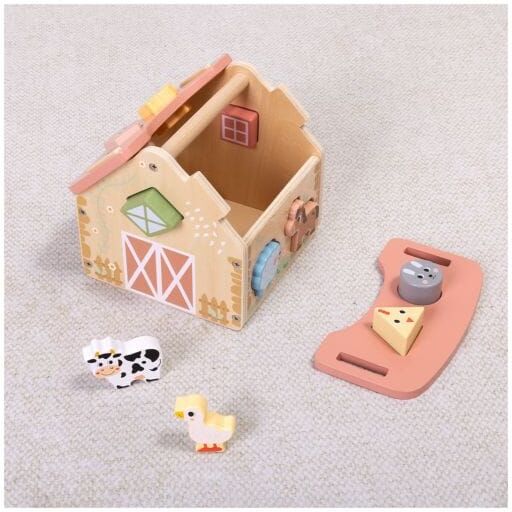
Tooky Toys Wooden Shape Sorter Barn - Toddler Toy for 3-4 Years - Fine Motor Skills DevelopmentWooden shape sorter barn designed for toddlers to practice spatial reasoning and fine motor control. Made from dense hardwood with sanded edges and low-VOC treatment. Includes chunky geometric blocks sized for small-hand grip strength. Each slot aligns with a specific block shape, reducing slippage. Smooth finish wipes clean after crayon marks or snack spills. Sturdy frame maintains integrity through stacking and drops. Reinforces visual discrimination and geometry vocabulary.11,08 £*Shipping: 3,95 £Secure redirect to the provider
-
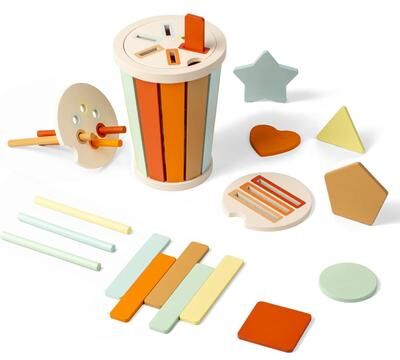
Youfap Market Montessori Wooden Shape Sorting Toy For Toddlers, Color Matching & Fine Motor Skills Development bGive your toddler a head start in learning with this Montessori wooden shape sorting toy. Designed for young learners, it helps build fine motor skills through colorful and interactive matching games. Perfect for kids ages 3 and up, this educational...64,97 $*Shipping: 0,00 $Secure redirect to the provider
-
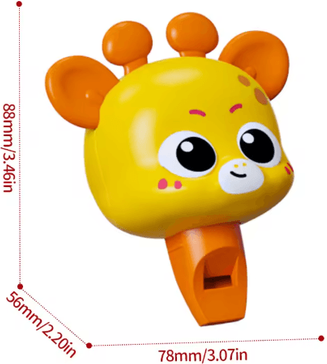
Inspire Picks Interactive Giraffe Suction Cup Toy Multifunctional Sensory Learning And Motor Skills Development Toy whistleEncourage handson learning and playful discovery with this interactive giraffe toy designed for growing minds. Featuring a strong suction cup base, it easily attaches to smooth surfaces for stable, engaging play at home or on the go. Made from safe,...34,93 $*Shipping: 0,00 $Secure redirect to the provider

-
What are mitochondria and chloroplasts?
Mitochondria are membrane-bound organelles found in the cells of eukaryotic organisms, responsible for producing energy in the form of ATP through cellular respiration. They have their own DNA and are thought to have originated from ancient bacteria through endosymbiosis. Chloroplasts are also membrane-bound organelles found in plant cells and some protists, responsible for photosynthesis, the process by which they convert sunlight into energy-rich molecules like glucose. Like mitochondria, chloroplasts also have their own DNA and are believed to have originated from ancient photosynthetic bacteria through endosymbiosis. **
-
Can humans also have chloroplasts?
No, humans cannot have chloroplasts. Chloroplasts are organelles found in plant cells that are responsible for photosynthesis, the process by which plants convert sunlight into energy. Humans do not have chloroplasts because they do not undergo photosynthesis. Instead, humans rely on the consumption of plants and other organisms to obtain the energy they need for survival. **
-
How are chloroplasts and plastids formed?
Chloroplasts and plastids are formed through a process called biogenesis, which involves the replication of existing organelles. They are believed to have originated from endosymbiotic cyanobacteria that were engulfed by a eukaryotic cell. Over time, these cyanobacteria evolved into chloroplasts and plastids, developing a symbiotic relationship with the host cell. This process allowed for the transfer of genetic material between the organelles and the host cell, leading to the formation of chloroplasts and plastids as we know them today. **
-
What are the functions of chloroplasts?
Chloroplasts are the organelles responsible for photosynthesis in plant cells. Their main function is to capture light energy and convert it into chemical energy in the form of glucose, which serves as the primary source of energy for the plant. Chloroplasts also contain chlorophyll, the green pigment that gives plants their color and is essential for the absorption of light during photosynthesis. Additionally, chloroplasts are involved in the synthesis of other important molecules, such as amino acids and lipids, and play a role in the regulation of cellular metabolism. **
Why do chloroplasts have a double membrane?
Chloroplasts have a double membrane because they are believed to have originated from a process called endosymbiosis, where a eukaryotic cell engulfed a photosynthetic prokaryote. The double membrane likely represents the original prokaryotic cell's plasma membrane and the membrane of the vesicle that engulfed it. This double membrane structure helps protect the chloroplast's internal structures and allows for compartmentalization of different metabolic processes within the organelle. **
In which leaf cells are chloroplasts located?
Chloroplasts are located in the mesophyll cells of the leaf. Mesophyll cells are the main site of photosynthesis in the leaf, and they contain numerous chloroplasts, which are responsible for capturing light energy and converting it into chemical energy through the process of photosynthesis. The chloroplasts contain the pigment chlorophyll, which gives leaves their green color and is essential for the absorption of light energy. **
Top-Angebote
Products related to Chloroplasts:
-
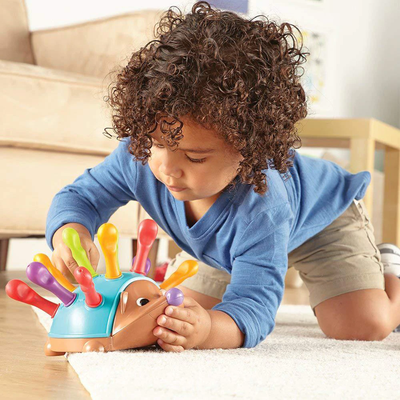
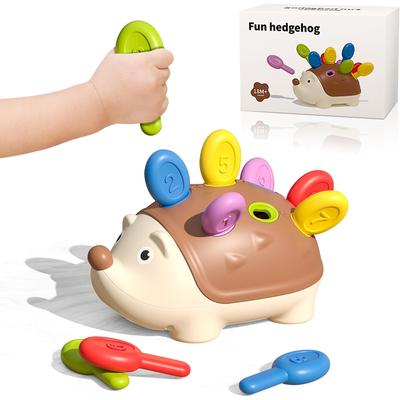
Playful Picks Montessori Hedgehog Color Sorting Educational Toddler Toy For Fine Motor Skills Development Montessori Hedgehog Color Sorting Educational Toddler Toy For Fine Motor Skills DevelopmentTurn early learning into a joyful daily adventure with a toy designed to spark curiosity and growth. The Montessori hedgehog toy is thoughtfully created for toddlers aged 13, helping them explore colors, counting, and coordination through handson...24,97 $*Shipping: 0,00 $Secure redirect to the provider
-
Tiny Tots Teens Trends Montessori Educational Toy, Hedgehog Fine Motor Skills, Toddler Counting, Sensory Development Montessori Educational Toy, Hedgehog Fine Motor Skills, Toddler Counting, Sensory DevelopmentHedgehog Montessori Educational Toy is a delightful and engaging learning tool designed to help toddlers develop essential fine motor skills, improve their concentration, and enhance sensory development. This toy promotes handson learning through...59,97 $*Shipping: 0,00 $Secure redirect to the provider
-
Learning Resources All About Me Family Counters Set of 72 - 72 Colorful Counters for Early Math Skills and Social Skills DevelopmentIntroducing the Learning Resources All About Me Family Counters Set of 72, a fun and educational tool designed to spark imagination and creativity in young learners. This vibrant set features a delightful array of family members, including parents, grandparents, and children, ideal for counting, sorting, and imaginative play. The set includes 72 colorful counters that are perfectly sized for little hands, making learning engaging and fun. The counters promote early math skills by encouraging counting, patterning, and sorting through playful activities. They also help develop social skills by fostering conversations about family dynamics and relationships. The All About Me Family Counters are suitable for a variety of settings, including home play, classroom activities, and birthday gifts. They are a great addition to any toy collection.18,69 £*Shipping: 3,95 £Secure redirect to the provider
-
Tooky Toys Wooden Shape Sorter Barn - Toddler Toy for 3-4 Years - Fine Motor Skills DevelopmentWooden shape sorter barn designed for toddlers to practice spatial reasoning and fine motor control. Made from dense hardwood with sanded edges and low-VOC treatment. Includes chunky geometric blocks sized for small-hand grip strength. Each slot aligns with a specific block shape, reducing slippage. Smooth finish wipes clean after crayon marks or snack spills. Sturdy frame maintains integrity through stacking and drops. Reinforces visual discrimination and geometry vocabulary.11,08 £*Shipping: 3,95 £Secure redirect to the provider
-
Which cells have chloroplasts?
Chloroplasts are found in plant cells and some algae cells. **
-
How are chloroplasts structured?
Chloroplasts are double-membrane organelles found in plant cells that contain their own DNA and ribosomes. They have a fluid-filled interior called the stroma, where the process of photosynthesis takes place. Within the stroma are stacks of thylakoid membranes called grana, which contain chlorophyll and other pigments that capture light energy. The thylakoid membranes are where the light-dependent reactions of photosynthesis occur, producing ATP and NADPH. Overall, the structure of chloroplasts is highly specialized for the process of photosynthesis, allowing plants to convert light energy into chemical energy. **
-
What are mitochondria and chloroplasts?
Mitochondria are membrane-bound organelles found in the cells of eukaryotic organisms, responsible for producing energy in the form of ATP through cellular respiration. They have their own DNA and are thought to have originated from ancient bacteria through endosymbiosis. Chloroplasts are also membrane-bound organelles found in plant cells and some protists, responsible for photosynthesis, the process by which they convert sunlight into energy-rich molecules like glucose. Like mitochondria, chloroplasts also have their own DNA and are believed to have originated from ancient photosynthetic bacteria through endosymbiosis. **
-
Can humans also have chloroplasts?
No, humans cannot have chloroplasts. Chloroplasts are organelles found in plant cells that are responsible for photosynthesis, the process by which plants convert sunlight into energy. Humans do not have chloroplasts because they do not undergo photosynthesis. Instead, humans rely on the consumption of plants and other organisms to obtain the energy they need for survival. **
Similar search terms for Chloroplasts
-
Youfap Market Montessori Wooden Shape Sorting Toy For Toddlers, Color Matching & Fine Motor Skills Development bGive your toddler a head start in learning with this Montessori wooden shape sorting toy. Designed for young learners, it helps build fine motor skills through colorful and interactive matching games. Perfect for kids ages 3 and up, this educational...64,97 $*Shipping: 0,00 $Secure redirect to the provider
-
Inspire Picks Interactive Giraffe Suction Cup Toy Multifunctional Sensory Learning And Motor Skills Development Toy whistleEncourage handson learning and playful discovery with this interactive giraffe toy designed for growing minds. Featuring a strong suction cup base, it easily attaches to smooth surfaces for stable, engaging play at home or on the go. Made from safe,...34,93 $*Shipping: 0,00 $Secure redirect to the provider
-
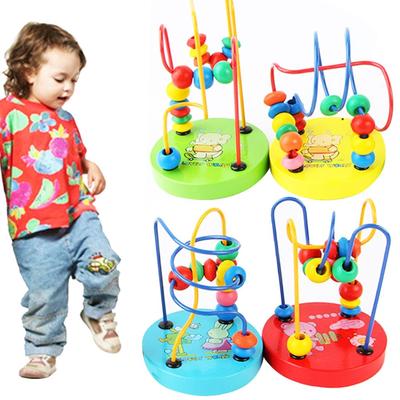
Snug & Styled Wooden Bead Maze Toy For Babies Educational Infant Motor Skills & Sensory Development Toy mnczj 2365Early childhood is the perfect stage to build curiosity, coordination, and cognitive growth through play. The wooden bead maze toy is thoughtfully designed to engage babies and toddlers in handson learning while keeping them entertained. As a safe...39,97 $*Shipping: 0,00 $Secure redirect to the provider
-
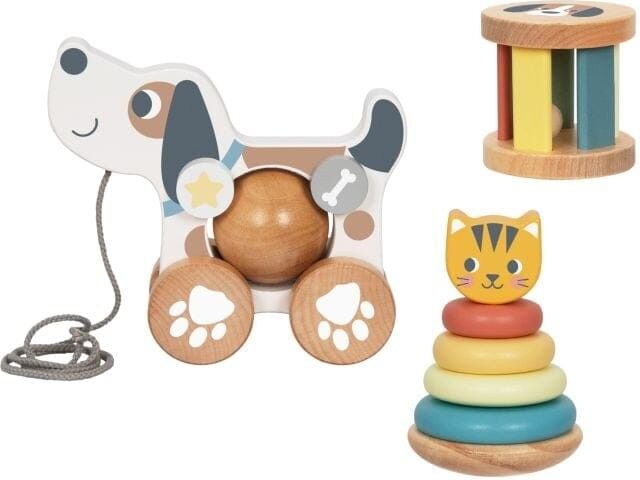
Tooky Toys Wooden 3 in 1 Gift Box - Develops Fine Motor Skills & Boosts Cognitive Development for KidsCompact toy with playful puppy design offering spinning, stacking, shape sorting, and pulling challenges. Solid wooden construction for durability and timeless appeal.18,47 £*Shipping: 3,95 £Secure redirect to the provider
-
How are chloroplasts and plastids formed?
Chloroplasts and plastids are formed through a process called biogenesis, which involves the replication of existing organelles. They are believed to have originated from endosymbiotic cyanobacteria that were engulfed by a eukaryotic cell. Over time, these cyanobacteria evolved into chloroplasts and plastids, developing a symbiotic relationship with the host cell. This process allowed for the transfer of genetic material between the organelles and the host cell, leading to the formation of chloroplasts and plastids as we know them today. **
-
What are the functions of chloroplasts?
Chloroplasts are the organelles responsible for photosynthesis in plant cells. Their main function is to capture light energy and convert it into chemical energy in the form of glucose, which serves as the primary source of energy for the plant. Chloroplasts also contain chlorophyll, the green pigment that gives plants their color and is essential for the absorption of light during photosynthesis. Additionally, chloroplasts are involved in the synthesis of other important molecules, such as amino acids and lipids, and play a role in the regulation of cellular metabolism. **
-
Why do chloroplasts have a double membrane?
Chloroplasts have a double membrane because they are believed to have originated from a process called endosymbiosis, where a eukaryotic cell engulfed a photosynthetic prokaryote. The double membrane likely represents the original prokaryotic cell's plasma membrane and the membrane of the vesicle that engulfed it. This double membrane structure helps protect the chloroplast's internal structures and allows for compartmentalization of different metabolic processes within the organelle. **
-
In which leaf cells are chloroplasts located?
Chloroplasts are located in the mesophyll cells of the leaf. Mesophyll cells are the main site of photosynthesis in the leaf, and they contain numerous chloroplasts, which are responsible for capturing light energy and converting it into chemical energy through the process of photosynthesis. The chloroplasts contain the pigment chlorophyll, which gives leaves their green color and is essential for the absorption of light energy. **
* All prices are inclusive of VAT and, if applicable, plus shipping costs. The offer information is based on the details provided by the respective shop and is updated through automated processes. Real-time updates do not occur, so deviations can occur in individual cases. ** Note: Parts of this content were created by AI.