Buy manpowerquiz.eu ?
We are moving the project
manpowerquiz.eu .
Are you interested in purchasing the domain
manpowerquiz.eu ?
domain@kv-gmbh.de · 0541-91531010
Buy manpowerquiz.eu ?
What are implicit, unspoken norms?
Implicit, unspoken norms are the unwritten rules and expectations that govern behavior within a particular social group or culture. These norms are not explicitly stated or communicated, but are understood and followed by members of the group through observation and socialization. They can include things like personal space, appropriate dress, and communication styles, and can vary widely across different cultures and social contexts. Implicit norms can be powerful influences on behavior, as individuals may feel pressure to conform to these expectations even without being explicitly told what they are. **
What are explicit and implicit norms?
Explicit norms are rules or expectations that are clearly stated and communicated, often formally. These norms are openly acknowledged and understood by members of a group or society. On the other hand, implicit norms are unspoken rules or expectations that are understood and followed by members of a group without being explicitly stated. These norms are often based on shared values, beliefs, and behaviors within a culture or community. **
Similar search terms for Implicit
Top-Angebote
Products related to Implicit:
-
Learning Resources All About Me Family Counters Set of 72 - 72 Colorful Counters for Early Math Skills and Social Skills DevelopmentIntroducing the Learning Resources All About Me Family Counters Set of 72, a fun and educational tool designed to spark imagination and creativity in young learners. This vibrant set features a delightful array of family members, including parents, grandparents, and children, ideal for counting, sorting, and imaginative play. The set includes 72 colorful counters that are perfectly sized for little hands, making learning engaging and fun. The counters promote early math skills by encouraging counting, patterning, and sorting through playful activities. They also help develop social skills by fostering conversations about family dynamics and relationships. The All About Me Family Counters are suitable for a variety of settings, including home play, classroom activities, and birthday gifts. They are a great addition to any toy collection.18,19 £*Shipping: 3,95 £Secure redirect to the provider
-
Uplifted Trends Montessori Sensory Busy Board Educational Drawer Cube For Baby Skills Development pinkUnlock your childs potential with the 6 in 1 Montessori Sensory Busy Board! This interactive, handson toy is designed to enhance baby motor skills while keeping them engaged for hours. Perfect for both girls and boys, it features various fidget...39,97 $*Shipping: 0,00 $Secure redirect to the provider
-
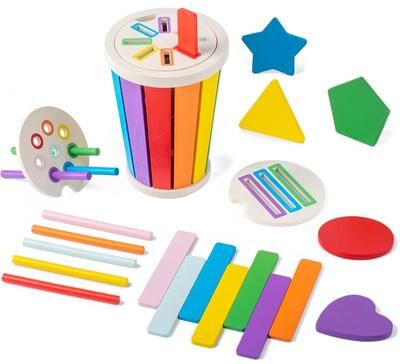
Youfap Market Montessori Wooden Shape Sorting Toy For Toddlers, Color Matching & Fine Motor Skills Development aGive your toddler a head start in learning with this Montessori wooden shape sorting toy. Designed for young learners, it helps build fine motor skills through colorful and interactive matching games. Perfect for kids ages 3 and up, this educational...64,97 $*Shipping: 0,00 $Secure redirect to the provider
-
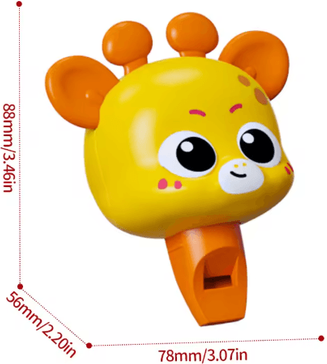
Inspire Picks Interactive Giraffe Suction Cup Toy Multifunctional Sensory Learning And Motor Skills Development Toy whistleEncourage handson learning and playful discovery with this interactive giraffe toy designed for growing minds. Featuring a strong suction cup base, it easily attaches to smooth surfaces for stable, engaging play at home or on the go. Made from safe,...34,93 $*Shipping: 0,00 $Secure redirect to the provider


-
How can I differentiate this implicit function?
To differentiate an implicit function, you can use the chain rule. First, differentiate both sides of the equation with respect to the variable you are trying to solve for. Then, isolate the derivative of the dependent variable on one side of the equation. Finally, solve for the derivative by dividing by the derivative of the independent variable. This process allows you to find the derivative of the implicit function without explicitly solving for the dependent variable. **
-
What is a sentence about implicit functions?
An implicit function is a function that is defined implicitly by an equation rather than explicitly by a formula. This means that the relationship between the variables is not immediately apparent and may require manipulation of the equation to solve for one variable in terms of the other. Implicit functions are commonly used in calculus and can describe relationships that are not easily expressed in explicit form. **
-
Is talent a form of implicit knowledge?
Talent can be considered a form of implicit knowledge in the sense that it often involves a natural ability or inclination towards a particular skill or activity. This innate talent may not always be consciously recognized or understood by the individual, but it can manifest in their exceptional performance or creativity in a specific area. However, it's important to note that talent can also be developed and honed through deliberate practice and learning, so it's not purely a result of implicit knowledge. Overall, talent can be seen as a combination of both implicit knowledge and learned skills. **
-
Are implicit costs the same as opportunity costs?
Implicit costs and opportunity costs are related concepts, but they are not exactly the same. Implicit costs refer to the non-monetary costs of using resources that a firm already owns, such as the opportunity cost of using its own capital or labor. On the other hand, opportunity costs are the value of the next best alternative that is foregone when a decision is made. While implicit costs are a type of opportunity cost, opportunity costs can also include explicit costs, such as the actual monetary expenses incurred. Therefore, while implicit costs are a component of opportunity costs, they are not synonymous. **

What is the difference between explicit and implicit characterization?
Explicit characterization refers to direct information provided by the author about a character's traits, personality, or background. This can include physical descriptions, direct statements about the character's thoughts or feelings, or other obvious details. On the other hand, implicit characterization involves indirect clues that readers must interpret to understand a character, such as actions, dialogue, interactions with others, or the character's choices and behaviors. Implicit characterization requires readers to make inferences and draw conclusions about a character based on the information presented in the text. **
What are examples of implicit religion in everyday life?
Examples of implicit religion in everyday life can include practices such as saying a prayer before a meal, wearing religious symbols or clothing, observing certain rituals or traditions, and using religious language or expressions in conversation. Additionally, engaging in acts of kindness, charity, or community service as a reflection of one's religious or spiritual beliefs can also be considered implicit expressions of religion. These subtle and often unconscious expressions of faith and spirituality are woven into the fabric of daily life and can have a significant impact on an individual's sense of identity and connection to their beliefs. **
Top-Angebote
Products related to Implicit:
-
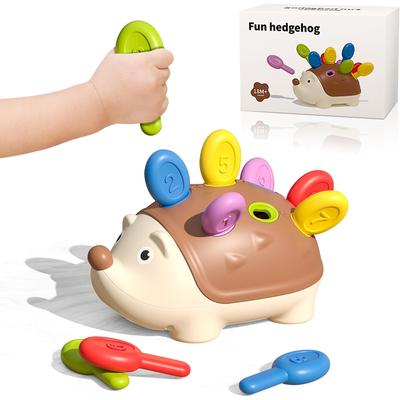
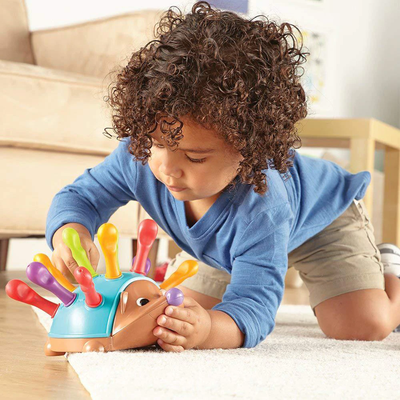
Tiny Tots Teens Trends Montessori Educational Toy, Hedgehog Fine Motor Skills, Toddler Counting, Sensory Development Montessori Educational Toy, Hedgehog Fine Motor Skills, Toddler Counting, Sensory DevelopmentHedgehog Montessori Educational Toy is a delightful and engaging learning tool designed to help toddlers develop essential fine motor skills, improve their concentration, and enhance sensory development. This toy promotes handson learning through...59,97 $*Shipping: 0,00 $Secure redirect to the provider
-
Playful Picks Montessori Hedgehog Color Sorting Educational Toddler Toy For Fine Motor Skills Development Montessori Hedgehog Color Sorting Educational Toddler Toy For Fine Motor Skills DevelopmentTurn early learning into a joyful daily adventure with a toy designed to spark curiosity and growth. The Montessori hedgehog toy is thoughtfully created for toddlers aged 13, helping them explore colors, counting, and coordination through handson...24,97 $*Shipping: 0,00 $Secure redirect to the provider
-
Learning Resources All About Me Family Counters Set of 72 - 72 Colorful Counters for Early Math Skills and Social Skills DevelopmentIntroducing the Learning Resources All About Me Family Counters Set of 72, a fun and educational tool designed to spark imagination and creativity in young learners. This vibrant set features a delightful array of family members, including parents, grandparents, and children, ideal for counting, sorting, and imaginative play. The set includes 72 colorful counters that are perfectly sized for little hands, making learning engaging and fun. The counters promote early math skills by encouraging counting, patterning, and sorting through playful activities. They also help develop social skills by fostering conversations about family dynamics and relationships. The All About Me Family Counters are suitable for a variety of settings, including home play, classroom activities, and birthday gifts. They are a great addition to any toy collection.18,19 £*Shipping: 3,95 £Secure redirect to the provider
-
Uplifted Trends Montessori Sensory Busy Board Educational Drawer Cube For Baby Skills Development pinkUnlock your childs potential with the 6 in 1 Montessori Sensory Busy Board! This interactive, handson toy is designed to enhance baby motor skills while keeping them engaged for hours. Perfect for both girls and boys, it features various fidget...39,97 $*Shipping: 0,00 $Secure redirect to the provider
-
What are implicit, unspoken norms?
Implicit, unspoken norms are the unwritten rules and expectations that govern behavior within a particular social group or culture. These norms are not explicitly stated or communicated, but are understood and followed by members of the group through observation and socialization. They can include things like personal space, appropriate dress, and communication styles, and can vary widely across different cultures and social contexts. Implicit norms can be powerful influences on behavior, as individuals may feel pressure to conform to these expectations even without being explicitly told what they are. **
-
What are explicit and implicit norms?
Explicit norms are rules or expectations that are clearly stated and communicated, often formally. These norms are openly acknowledged and understood by members of a group or society. On the other hand, implicit norms are unspoken rules or expectations that are understood and followed by members of a group without being explicitly stated. These norms are often based on shared values, beliefs, and behaviors within a culture or community. **
-
How can I differentiate this implicit function?
To differentiate an implicit function, you can use the chain rule. First, differentiate both sides of the equation with respect to the variable you are trying to solve for. Then, isolate the derivative of the dependent variable on one side of the equation. Finally, solve for the derivative by dividing by the derivative of the independent variable. This process allows you to find the derivative of the implicit function without explicitly solving for the dependent variable. **
-
What is a sentence about implicit functions?
An implicit function is a function that is defined implicitly by an equation rather than explicitly by a formula. This means that the relationship between the variables is not immediately apparent and may require manipulation of the equation to solve for one variable in terms of the other. Implicit functions are commonly used in calculus and can describe relationships that are not easily expressed in explicit form. **
Similar search terms for Implicit
-
Youfap Market Montessori Wooden Shape Sorting Toy For Toddlers, Color Matching & Fine Motor Skills Development aGive your toddler a head start in learning with this Montessori wooden shape sorting toy. Designed for young learners, it helps build fine motor skills through colorful and interactive matching games. Perfect for kids ages 3 and up, this educational...64,97 $*Shipping: 0,00 $Secure redirect to the provider
-
Inspire Picks Interactive Giraffe Suction Cup Toy Multifunctional Sensory Learning And Motor Skills Development Toy whistleEncourage handson learning and playful discovery with this interactive giraffe toy designed for growing minds. Featuring a strong suction cup base, it easily attaches to smooth surfaces for stable, engaging play at home or on the go. Made from safe,...34,93 $*Shipping: 0,00 $Secure redirect to the provider
-
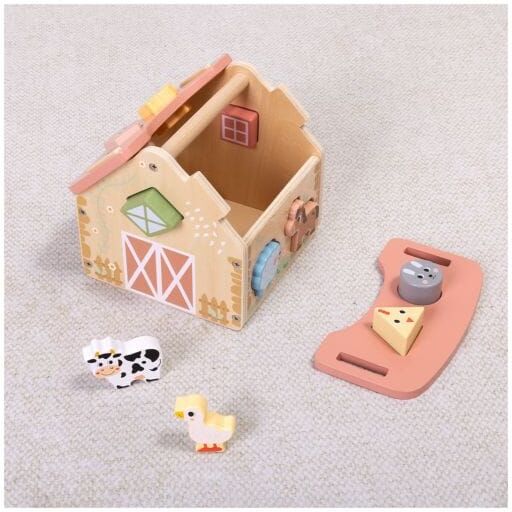
Tooky Toys Wooden Shape Sorter Barn - Toddler Toy for 3-4 Years - Fine Motor Skills DevelopmentWooden shape sorter barn designed for toddlers to practice spatial reasoning and fine motor control. Made from dense hardwood with sanded edges and low-VOC treatment. Includes chunky geometric blocks sized for small-hand grip strength. Each slot aligns with a specific block shape, reducing slippage. Smooth finish wipes clean after crayon marks or snack spills. Sturdy frame maintains integrity through stacking and drops. Reinforces visual discrimination and geometry vocabulary.11,08 £*Shipping: 3,95 £Secure redirect to the provider
-
Uplifted Trends Montessori Sensory Busy Board Educational Drawer Cube For Baby Skills Development greenUnlock your childs potential with the 6 in 1 Montessori Sensory Busy Board! This interactive, handson toy is designed to enhance baby motor skills while keeping them engaged for hours. Perfect for both girls and boys, it features various fidget...39,97 $*Shipping: 0,00 $Secure redirect to the provider
-
Is talent a form of implicit knowledge?
Talent can be considered a form of implicit knowledge in the sense that it often involves a natural ability or inclination towards a particular skill or activity. This innate talent may not always be consciously recognized or understood by the individual, but it can manifest in their exceptional performance or creativity in a specific area. However, it's important to note that talent can also be developed and honed through deliberate practice and learning, so it's not purely a result of implicit knowledge. Overall, talent can be seen as a combination of both implicit knowledge and learned skills. **
-
Are implicit costs the same as opportunity costs?
Implicit costs and opportunity costs are related concepts, but they are not exactly the same. Implicit costs refer to the non-monetary costs of using resources that a firm already owns, such as the opportunity cost of using its own capital or labor. On the other hand, opportunity costs are the value of the next best alternative that is foregone when a decision is made. While implicit costs are a type of opportunity cost, opportunity costs can also include explicit costs, such as the actual monetary expenses incurred. Therefore, while implicit costs are a component of opportunity costs, they are not synonymous. **
-
What is the difference between explicit and implicit characterization?
Explicit characterization refers to direct information provided by the author about a character's traits, personality, or background. This can include physical descriptions, direct statements about the character's thoughts or feelings, or other obvious details. On the other hand, implicit characterization involves indirect clues that readers must interpret to understand a character, such as actions, dialogue, interactions with others, or the character's choices and behaviors. Implicit characterization requires readers to make inferences and draw conclusions about a character based on the information presented in the text. **
-
What are examples of implicit religion in everyday life?
Examples of implicit religion in everyday life can include practices such as saying a prayer before a meal, wearing religious symbols or clothing, observing certain rituals or traditions, and using religious language or expressions in conversation. Additionally, engaging in acts of kindness, charity, or community service as a reflection of one's religious or spiritual beliefs can also be considered implicit expressions of religion. These subtle and often unconscious expressions of faith and spirituality are woven into the fabric of daily life and can have a significant impact on an individual's sense of identity and connection to their beliefs. **
* All prices are inclusive of VAT and, if applicable, plus shipping costs. The offer information is based on the details provided by the respective shop and is updated through automated processes. Real-time updates do not occur, so deviations can occur in individual cases. ** Note: Parts of this content were created by AI.