Buy manpowerquiz.eu ?
We are moving the project
manpowerquiz.eu .
Are you interested in purchasing the domain
manpowerquiz.eu ?
domain@kv-gmbh.de · 0541-91531010
Buy manpowerquiz.eu ?
What are examples of adding forces, subtracting forces, and balancing forces?
Examples of adding forces include pushing a box with two people applying force in the same direction, or two cars pulling a heavy object with their combined force. Subtracting forces can be seen when one person pushes a box to the right with a certain force, while another person pushes the same box to the left with a smaller force, resulting in a net force to the right. Balancing forces occur when two people pull on a rope with equal force in opposite directions, resulting in no movement of the rope. **
How can I determine the total force by subtracting, adding forces, and considering force equilibrium?
To determine the total force acting on an object, you can add all the forces acting in the same direction and subtract forces acting in the opposite direction. By applying the principle of force equilibrium, which states that the sum of all forces acting on an object is zero when the object is in a state of rest or moving at a constant velocity, you can determine the total force acting on the object. This method allows you to calculate the net force acting on an object by considering all the individual forces acting on it. **
Similar search terms for Numberblocks-Adding-and-Subtracting
Top-Angebote
Products related to Numberblocks-Adding-and-Subtracting:
-
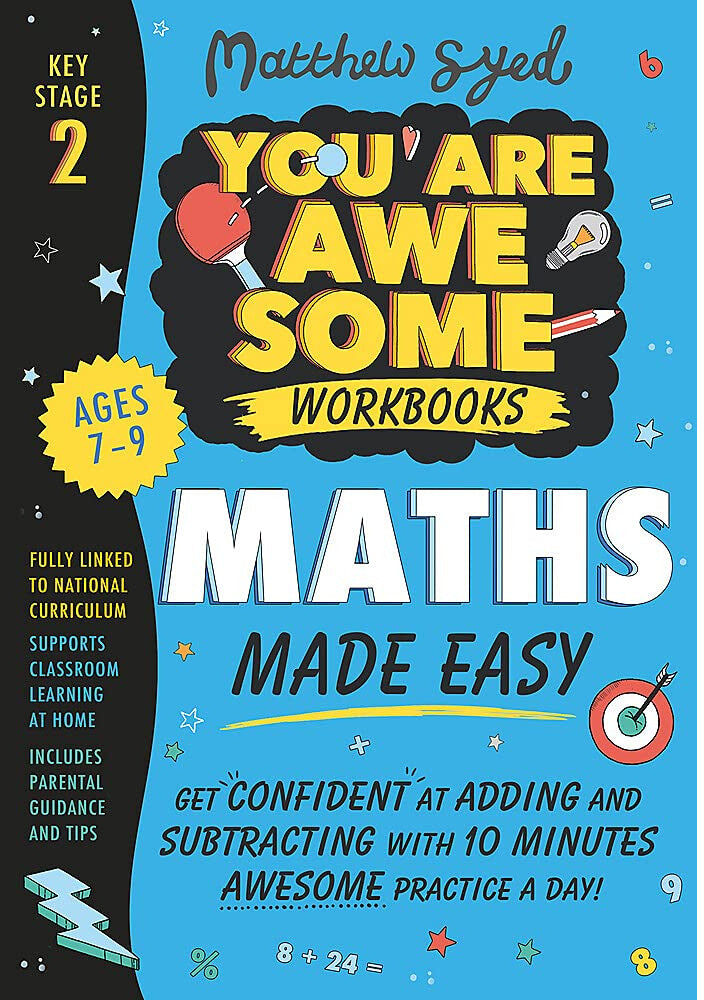
Wren & Rook Maths Made Easy: Get confident at adding and subtracting with 10 minutes' awesome practice a day! (You Are Awesome)Help children to find their confidence in Maths with these AWESOME curriculum-linked workbooks that will encourage practise, build self esteem and a positive growth mindset. From the author of the children's number 1 bestseller You Are Awesome - and supported by education specialists - this workbook reinforces Matthew's positive message about finding the confidence to try, not being afraid of failure and the awesome power of practice. The curriculum-relevant exercises encourage children to employ a growth mindset when it comes to subjects they find difficult, and will help them succeed in Maths! Suitable for ages 7 to 9.3,49 £*Shipping: 1,99 £Secure redirect to the provider
-
Learning Resources Numberblocks Five's Musical Superstar Stage - Interactive Play for Early Math Skills - Ages 3 and UpBring the magic of music and numbers to life with the Learning Resources Numberblocks Five's Musical Superstar Stage. This delightful toy entertains and enhances early learning through play. Your child can engage with the charming Numberblock Five character, singing catchy songs and dancing along to the inclusive rhythm. Key features include interactive play, where your child can press buttons to hear fun musical phrases and educational songs that support early math skills. The stage also encourages imaginative fun, perfect for solo play or group activities, sparking creativity and interactive storytelling. It looks great on display in any playroom and can be a wonderful gift for birthdays or special occasions. Let your child's imagination soar as they step into the spotlight with Numberblock Five.37,35 £*Shipping: 3,95 £Secure redirect to the provider
-
Learning Resources Numberblocks Sing-Along Superhero Eight - Interactive Toy for Early Numeracy Skills - Ages 3 and UpIntroducing the Learning Resources Numberblocks Sing-Along Superhero Eight, a delightful toy that sparks joy and encourages early numeracy skills through engaging songs and playful interactions. Perfect for little learners, Superhero Eight helps children explore the world of numbers while fostering creativity and imaginative play. Key features include interactive singing, a colorful design, and the ability to encourage learning. It's an ideal gift for birthdays, holidays, or any special occasion, suitable for solo play, group activities, or as a vibrant addition to your child's toy collection. Parents will appreciate how it combines education with fun.27,13 £*Shipping: 3,95 £Secure redirect to the provider
-
Numberblocks Sensory Bubble Poppers: Explore Counting, Early Maths Skills and More! - Ages 3+ - Educational Toy Learning ResourcesPOP, COUNT & PLAY: These are the ultimate fidget toys for Numberblocks fans. Little fingers can pop and play with their friends One to Ten from the global hit TV series. Use these at home, in the classroom or on the go. TACTILE & DURABLE: Made to last from high quality materials, children will enjoy popping and playing with One to Ten over and over again. Fans will appreciate the unique character details, including their vibrant colours, arms and legs, and Numberlings. MATHS TOY: As little fingers fidget and play, they build their fine motor skills and practise early maths skills, including counting 1 to 10, one-to-one correspondence and more. TRAVEL TOY: Each durable popper has a keychain attachment, so children can take their friends One to Ten with them wherever they go. This feature makes them ideal for helping children calm down and focus through sensory play. INCLUDES: 10 Numberblocks Sensory Bubble Poppers and key chain attachments. One measures 5cm L x 7cm W. Packaging is multilingual. OFFICIAL NUMBERBLOCKS TOYS: Play and learn with official Numberblocks toys and games made by leading educational toys company Learning Resources.17,49 £*Shipping: 2,99 £Secure redirect to the provider



-
How can I determine the total force by subtracting, adding, and considering the force equilibrium?
To determine the total force in a system, you can first add up all the individual forces acting on the system. This will give you the total force acting on the system. Then, you can subtract any opposing forces to find the net force acting on the system. Finally, you can consider force equilibrium by ensuring that the sum of all forces in the system is equal to zero. This will help you determine if the system is in a state of equilibrium or if there is a net force acting on it. **
-
Why can't powers with the same base be added or subtracted by adding or subtracting the exponents?
Powers with the same base cannot be added or subtracted by simply adding or subtracting the exponents because the exponents represent the number of times the base is multiplied by itself. When adding or subtracting powers with the same base, the exponents indicate how many times the base is multiplied, and simply adding or subtracting the exponents would not accurately represent the multiplication or division of the base. Therefore, the powers must be multiplied or divided according to the rules of exponents in order to combine them. **
-
What is the number, if adding 6 to three times that number gives the same result as subtracting twice that number from 61?
Let's represent the number as x. According to the problem, the equation can be set up as: 3x + 6 = 61 - 2x. Simplifying this equation, we get 5x = 55. Dividing both sides by 5, we find that x = 11. Therefore, the number is 11. **
-
What is the difference between adding a network drive and adding a network address?
Adding a network drive involves connecting to a shared folder on a network server and assigning it a drive letter on the local computer, allowing the user to access the shared files as if they were stored on the local drive. On the other hand, adding a network address involves creating a shortcut to a network resource, such as a shared folder or a network printer, without assigning it a drive letter. This allows the user to quickly access the network resource without creating a new drive on the local computer. In summary, adding a network drive creates a virtual drive on the local computer for accessing shared files, while adding a network address creates a shortcut to a network resource without assigning it a drive letter. **


What am I doing wrong when subtracting?
When subtracting, it's important to ensure that you are aligning the numbers properly, with the larger number on top and the smaller number on the bottom. Also, make sure to borrow or regroup when necessary, especially when subtracting across different place values. Double-check your work to ensure that you are subtracting the correct digits and carrying over any necessary values. If you are still having trouble, consider practicing with simpler problems and seeking additional help or resources to improve your subtraction skills. **
Where is the error in subtracting binary numbers?
The error in subtracting binary numbers typically occurs when borrowing is not properly carried out. When subtracting, if the digit being subtracted is larger than the digit it is being subtracted from, a borrow is needed from the next higher-order bit. If this borrow is not properly accounted for, it can lead to incorrect results. Additionally, errors can also occur if the numbers being subtracted are not properly aligned, leading to incorrect borrow operations. Therefore, careful attention to borrowing and alignment is crucial to avoid errors when subtracting binary numbers. **
Top-Angebote
Products related to Numberblocks-Adding-and-Subtracting:
-
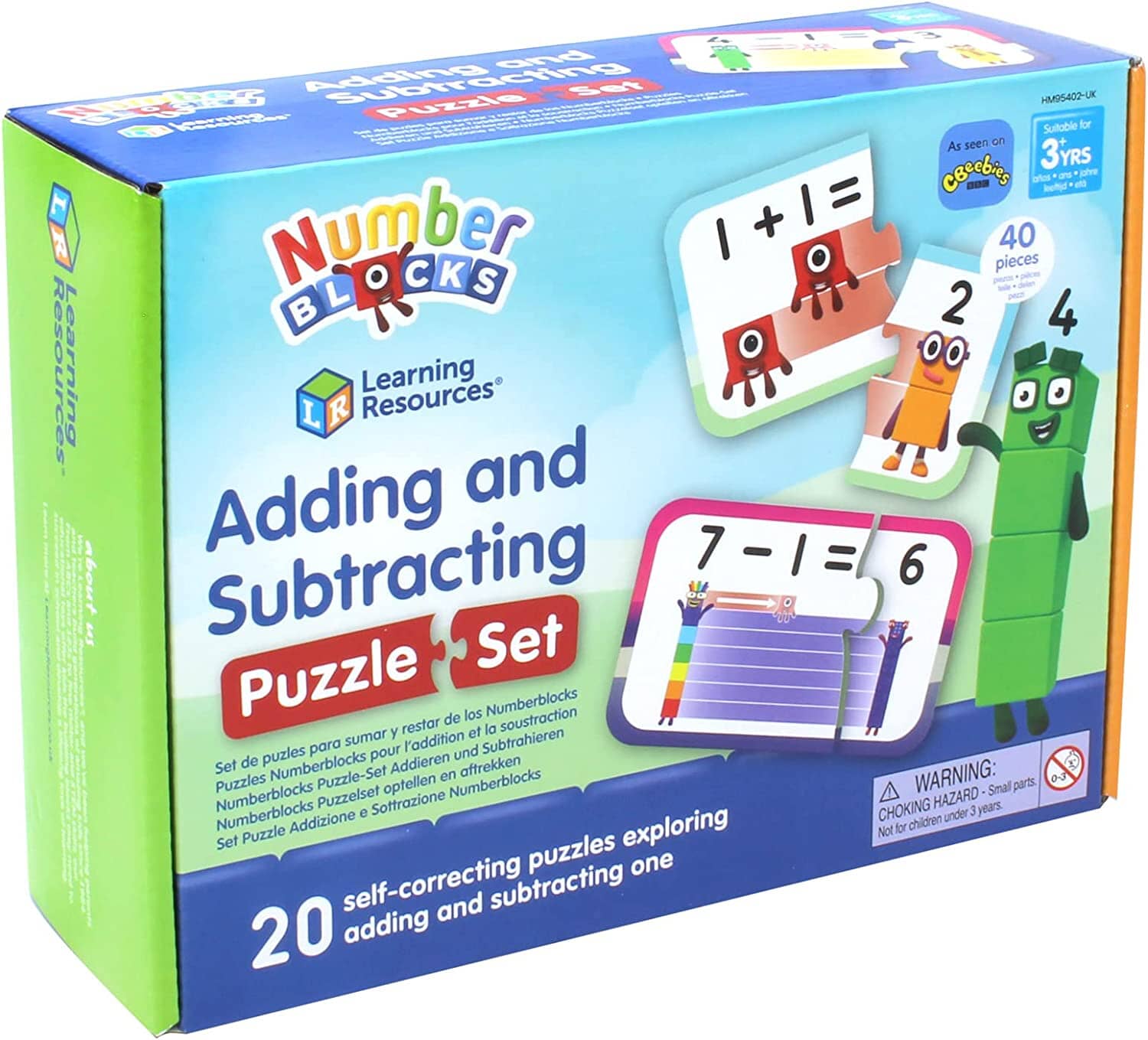
Numberblocks Adding and Subtracting Puzzle Set by Learning Resources - Ages 3 Years+ Learning ResourcesNUMBERBLOCKS AS SEEN ON TV: Discover what happens when you add or subtract 1 with these simple 2-piece Numberblocks jigsaw puzzles based on the award-winning TV series. ADD & SUBTRACT: Make learning simple addition and subtraction fun for young children! As children complete the 20 colourful puzzles, they’ll be building basic maths skills along with colour recognition and fine motor skills. MATCH NUMBERS & PICTURES: See the addition or subtraction question, count the Numberblocks on the puzzle piece, and then find the correct answer piece. SELF-CORRECTING PUZZLES: Each of these clever self-correcting Numberblocks counting puzzles fits together in a unique way, so there’s only one right answer. INCLUDES: 20 x 2-piece puzzles. The chunky pieces are made from durable card and are easy for little hands to hold. Pieces store in the reusable packaging after play. Completed puzzles measure 15cm L x 10cm W.15,99 £*Shipping: 2,99 £Secure redirect to the provider
-
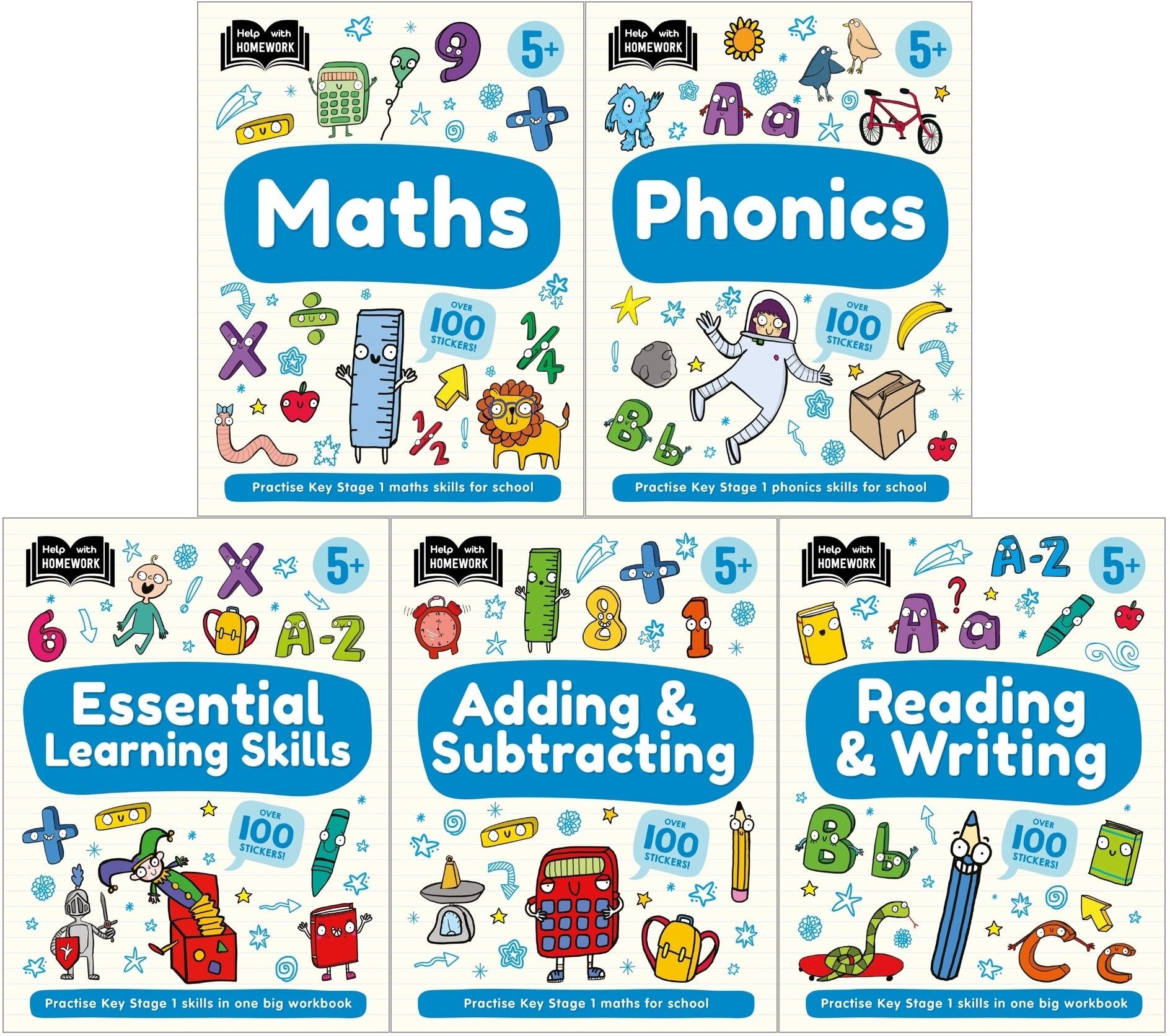
Autumn Publishing Help With Homework 5 Books Collection Set Age 5+ (Essential Learning Skills, Maths, Phonics, Reading & Writing, Adding & Subtracting)Help With Homework 5 Books Collection Set Age 5+ (Essential Learning Skills, Maths, Phonics, Reading & Writing, Adding & Subtracting) Packed with fun, expert-reviewed activities designed for Key Stage 1, these workbooks are the perfect link between school and home learning. Including over 100 stickers, games, puzzles and activities, children are sure to have fun while learning essential skills for school! Essential Learning Skills - Learn essential learning skills for school - Prepare preschoolers for Key Stage 1 SATs - Age-appropriate content for ages 5 and up - Reward stickers to motivate learners - Activities to make learning fun! - Perfect for supporting home learning Maths - Learn essential maths skills - Prepare preschoolers for Key Stage 1 SATs - Age-appropriate content for ages 5 and up - Reward stickers to motivate learners - Activities to make learning fun! - Perfect for supporting home learning Phonics - Learn essential phonics skills - Prepare preschoolers for Key Stage 1 SATs - Age-appropriate content for ages 5 and up - Reward stickers to motivate learners - Activities to make learning fun! - Perfect for supporting home learning Reading & Writing - Learn essential reading and writing skills - Prepare preschoolers for Key Stage 1 SATs - Age-appropriate content for ages 5 and up - Reward stickers to motivate learners - Activities to make learning fun! - Perfect for supporting home learning Adding & Subtracting - Learn essential maths skills - Prepare preschoolers for Key Stage 1 SATs - Age-appropriate content for ages 5 and up - Reward stickers to motivate learners - Activities to make learning fun! - Perfect for supporting home learning9,99 £*Shipping: 2,99 £Secure redirect to the provider
-
Wren & Rook Maths Made Easy: Get confident at adding and subtracting with 10 minutes' awesome practice a day! (You Are Awesome)Help children to find their confidence in Maths with these AWESOME curriculum-linked workbooks that will encourage practise, build self esteem and a positive growth mindset. From the author of the children's number 1 bestseller You Are Awesome - and supported by education specialists - this workbook reinforces Matthew's positive message about finding the confidence to try, not being afraid of failure and the awesome power of practice. The curriculum-relevant exercises encourage children to employ a growth mindset when it comes to subjects they find difficult, and will help them succeed in Maths! Suitable for ages 7 to 9.3,49 £*Shipping: 1,99 £Secure redirect to the provider
-
Learning Resources Numberblocks Five's Musical Superstar Stage - Interactive Play for Early Math Skills - Ages 3 and UpBring the magic of music and numbers to life with the Learning Resources Numberblocks Five's Musical Superstar Stage. This delightful toy entertains and enhances early learning through play. Your child can engage with the charming Numberblock Five character, singing catchy songs and dancing along to the inclusive rhythm. Key features include interactive play, where your child can press buttons to hear fun musical phrases and educational songs that support early math skills. The stage also encourages imaginative fun, perfect for solo play or group activities, sparking creativity and interactive storytelling. It looks great on display in any playroom and can be a wonderful gift for birthdays or special occasions. Let your child's imagination soar as they step into the spotlight with Numberblock Five.37,35 £*Shipping: 3,95 £Secure redirect to the provider
-
What are examples of adding forces, subtracting forces, and balancing forces?
Examples of adding forces include pushing a box with two people applying force in the same direction, or two cars pulling a heavy object with their combined force. Subtracting forces can be seen when one person pushes a box to the right with a certain force, while another person pushes the same box to the left with a smaller force, resulting in a net force to the right. Balancing forces occur when two people pull on a rope with equal force in opposite directions, resulting in no movement of the rope. **
-
How can I determine the total force by subtracting, adding forces, and considering force equilibrium?
To determine the total force acting on an object, you can add all the forces acting in the same direction and subtract forces acting in the opposite direction. By applying the principle of force equilibrium, which states that the sum of all forces acting on an object is zero when the object is in a state of rest or moving at a constant velocity, you can determine the total force acting on the object. This method allows you to calculate the net force acting on an object by considering all the individual forces acting on it. **
-
How can I determine the total force by subtracting, adding, and considering the force equilibrium?
To determine the total force in a system, you can first add up all the individual forces acting on the system. This will give you the total force acting on the system. Then, you can subtract any opposing forces to find the net force acting on the system. Finally, you can consider force equilibrium by ensuring that the sum of all forces in the system is equal to zero. This will help you determine if the system is in a state of equilibrium or if there is a net force acting on it. **
-
Why can't powers with the same base be added or subtracted by adding or subtracting the exponents?
Powers with the same base cannot be added or subtracted by simply adding or subtracting the exponents because the exponents represent the number of times the base is multiplied by itself. When adding or subtracting powers with the same base, the exponents indicate how many times the base is multiplied, and simply adding or subtracting the exponents would not accurately represent the multiplication or division of the base. Therefore, the powers must be multiplied or divided according to the rules of exponents in order to combine them. **
Similar search terms for Numberblocks-Adding-and-Subtracting
-
Learning Resources Numberblocks Sing-Along Superhero Eight - Interactive Toy for Early Numeracy Skills - Ages 3 and UpIntroducing the Learning Resources Numberblocks Sing-Along Superhero Eight, a delightful toy that sparks joy and encourages early numeracy skills through engaging songs and playful interactions. Perfect for little learners, Superhero Eight helps children explore the world of numbers while fostering creativity and imaginative play. Key features include interactive singing, a colorful design, and the ability to encourage learning. It's an ideal gift for birthdays, holidays, or any special occasion, suitable for solo play, group activities, or as a vibrant addition to your child's toy collection. Parents will appreciate how it combines education with fun.27,13 £*Shipping: 3,95 £Secure redirect to the provider
-
Numberblocks Sensory Bubble Poppers: Explore Counting, Early Maths Skills and More! - Ages 3+ - Educational Toy Learning ResourcesPOP, COUNT & PLAY: These are the ultimate fidget toys for Numberblocks fans. Little fingers can pop and play with their friends One to Ten from the global hit TV series. Use these at home, in the classroom or on the go. TACTILE & DURABLE: Made to last from high quality materials, children will enjoy popping and playing with One to Ten over and over again. Fans will appreciate the unique character details, including their vibrant colours, arms and legs, and Numberlings. MATHS TOY: As little fingers fidget and play, they build their fine motor skills and practise early maths skills, including counting 1 to 10, one-to-one correspondence and more. TRAVEL TOY: Each durable popper has a keychain attachment, so children can take their friends One to Ten with them wherever they go. This feature makes them ideal for helping children calm down and focus through sensory play. INCLUDES: 10 Numberblocks Sensory Bubble Poppers and key chain attachments. One measures 5cm L x 7cm W. Packaging is multilingual. OFFICIAL NUMBERBLOCKS TOYS: Play and learn with official Numberblocks toys and games made by leading educational toys company Learning Resources.17,49 £*Shipping: 2,99 £Secure redirect to the provider
-
Learning Resources Numberblocks Number Fun Phone for 2+ years - Interactive Toy with Number Recognition and Counting SkillsIntroduce your little learner to the world of numbers with the Numberblocks Number Fun Phone from Learning Resources. Designed for children aged 2 years and over, this colourful interactive toy lets them say hello to Numberblocks One to Ten while developing early number skills through hands-on pretend play. Press the bright number buttons to explore over 30 songs, sounds, and special messages. Children can practice recognising numbers from 1 to 10, count along with the Numberblocks characters, and enjoy imaginative phone conversations. The toy also includes pretend camera play, helping to build communication, listening, and role-play skills in a familiar, child-friendly format. With its chunky phone design and clear Numberblocks character buttons, this is an engaging first interactive toy for play at home or on the move.9,88 £*Shipping: 3,95 £Secure redirect to the provider
-
Learning Resources Numberblocks Seven Playful Pal - Encourages Early Math Skills and Number Recognition for Kids - Ages 3 and UpMeet the Learning Resources Numberblock Seven Playful Pal, a delightful companion for young children as they explore numbers and counting. This vibrant character is designed to engage young minds through imaginative play, making math fun and accessible. Key features of Numberblock Seven include a colorful design that captures children's attention, educational value that encourages early math skills and number recognition, and durable materials made from high-quality, child-safe materials. This toy is perfect for display on shelves, imaginative play sessions, or as part of a collection for aspiring young mathematicians. It's a great addition to any playroom or classroom, inspiring learning and creativity in children.18,73 £*Shipping: 3,95 £Secure redirect to the provider
-
What is the number, if adding 6 to three times that number gives the same result as subtracting twice that number from 61?
Let's represent the number as x. According to the problem, the equation can be set up as: 3x + 6 = 61 - 2x. Simplifying this equation, we get 5x = 55. Dividing both sides by 5, we find that x = 11. Therefore, the number is 11. **
-
What is the difference between adding a network drive and adding a network address?
Adding a network drive involves connecting to a shared folder on a network server and assigning it a drive letter on the local computer, allowing the user to access the shared files as if they were stored on the local drive. On the other hand, adding a network address involves creating a shortcut to a network resource, such as a shared folder or a network printer, without assigning it a drive letter. This allows the user to quickly access the network resource without creating a new drive on the local computer. In summary, adding a network drive creates a virtual drive on the local computer for accessing shared files, while adding a network address creates a shortcut to a network resource without assigning it a drive letter. **
-
What am I doing wrong when subtracting?
When subtracting, it's important to ensure that you are aligning the numbers properly, with the larger number on top and the smaller number on the bottom. Also, make sure to borrow or regroup when necessary, especially when subtracting across different place values. Double-check your work to ensure that you are subtracting the correct digits and carrying over any necessary values. If you are still having trouble, consider practicing with simpler problems and seeking additional help or resources to improve your subtraction skills. **
-
Where is the error in subtracting binary numbers?
The error in subtracting binary numbers typically occurs when borrowing is not properly carried out. When subtracting, if the digit being subtracted is larger than the digit it is being subtracted from, a borrow is needed from the next higher-order bit. If this borrow is not properly accounted for, it can lead to incorrect results. Additionally, errors can also occur if the numbers being subtracted are not properly aligned, leading to incorrect borrow operations. Therefore, careful attention to borrowing and alignment is crucial to avoid errors when subtracting binary numbers. **
* All prices are inclusive of VAT and, if applicable, plus shipping costs. The offer information is based on the details provided by the respective shop and is updated through automated processes. Real-time updates do not occur, so deviations can occur in individual cases. ** Note: Parts of this content were created by AI.