Buy manpowerquiz.eu ?
We are moving the project
manpowerquiz.eu .
Are you interested in purchasing the domain
manpowerquiz.eu ?
domain@kv-gmbh.de · 0541-91531010
Buy manpowerquiz.eu ?
What is signal transduction?
Signal transduction is the process by which cells convert extracellular signals into specific cellular responses. It involves a series of molecular events that relay the signal from the cell surface to the nucleus, where gene expression can be altered. This process is crucial for cells to respond appropriately to their environment and maintain homeostasis. Signal transduction pathways often involve the activation of protein kinases, second messengers, and transcription factors. **
Why is sensory transduction necessary?
Sensory transduction is necessary because it allows the body to convert various forms of environmental stimuli, such as light, sound, touch, and chemical signals, into electrical signals that can be interpreted by the nervous system. This process is essential for the body to perceive and respond to its surroundings, allowing for the detection of potential dangers, the regulation of bodily functions, and the experience of sensations such as taste, smell, and touch. Without sensory transduction, the body would not be able to effectively interact with its environment and respond to changes in its surroundings. **

Similar search terms for Transduction
Top-Angebote
Products related to Transduction:
-
Learning Resources All About Me Family Counters Set of 72 - 72 Colorful Counters for Early Math Skills and Social Skills DevelopmentIntroducing the Learning Resources All About Me Family Counters Set of 72, a fun and educational tool designed to spark imagination and creativity in young learners. This vibrant set features a delightful array of family members, including parents, grandparents, and children, ideal for counting, sorting, and imaginative play. The set includes 72 colorful counters that are perfectly sized for little hands, making learning engaging and fun. The counters promote early math skills by encouraging counting, patterning, and sorting through playful activities. They also help develop social skills by fostering conversations about family dynamics and relationships. The All About Me Family Counters are suitable for a variety of settings, including home play, classroom activities, and birthday gifts. They are a great addition to any toy collection.18,19 £*Shipping: 3,95 £Secure redirect to the provider
-
Uplifted Trends Montessori Sensory Busy Board Educational Drawer Cube For Baby Skills Development pinkUnlock your childs potential with the 6 in 1 Montessori Sensory Busy Board! This interactive, handson toy is designed to enhance baby motor skills while keeping them engaged for hours. Perfect for both girls and boys, it features various fidget...39,97 $*Shipping: 0,00 $Secure redirect to the provider
-
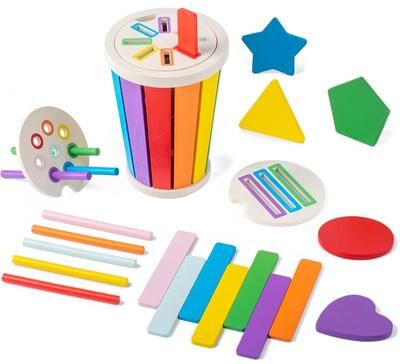
Youfap Market Montessori Wooden Shape Sorting Toy For Toddlers, Color Matching & Fine Motor Skills Development aGive your toddler a head start in learning with this Montessori wooden shape sorting toy. Designed for young learners, it helps build fine motor skills through colorful and interactive matching games. Perfect for kids ages 3 and up, this educational...64,97 $*Shipping: 0,00 $Secure redirect to the provider
-
Inspire Picks Interactive Giraffe Suction Cup Toy Multifunctional Sensory Learning And Motor Skills Development Toy whistleEncourage handson learning and playful discovery with this interactive giraffe toy designed for growing minds. Featuring a strong suction cup base, it easily attaches to smooth surfaces for stable, engaging play at home or on the go. Made from safe,...34,93 $*Shipping: 0,00 $Secure redirect to the provider



-
What is transduction in the eye?
Transduction in the eye refers to the process by which light energy is converted into electrical signals that can be interpreted by the brain. This process occurs in the retina, where specialized cells called photoreceptors (rods and cones) capture light and convert it into electrical signals. These signals are then transmitted to the brain via the optic nerve, where they are processed and interpreted as visual information. **
-
How does the process of signal transduction proceed?
Signal transduction is a process by which a cell converts an extracellular signal into a specific cellular response. It typically involves a series of steps, starting with the binding of a signaling molecule to a receptor on the cell surface. This binding triggers a cascade of events inside the cell, often involving the activation of various proteins and second messengers. Ultimately, this leads to changes in gene expression, cell metabolism, or other cellular functions to produce the desired response to the initial signal. **
-
How can one explain signal transduction and signal transmission?
Signal transduction is the process by which a cell converts an extracellular signal into a specific cellular response. This process typically involves a series of molecular events, including the binding of a signaling molecule to a receptor on the cell surface, activation of intracellular signaling pathways, and ultimately leading to changes in gene expression, metabolism, or other cellular functions. Signal transmission, on the other hand, refers to the propagation of the signal from one cell to another, often through the release of signaling molecules such as hormones or neurotransmitters. Together, signal transduction and signal transmission allow cells to communicate with each other and coordinate their activities in response to external stimuli. **
-
What is the photo transduction in the dark current during illumination?
Photo transduction in the dark current during illumination refers to the process by which light activates photoreceptor cells in the retina. When light hits the photoreceptor cells, it triggers a cascade of biochemical reactions that ultimately lead to the hyperpolarization of the cell membrane. This hyperpolarization reduces the release of neurotransmitters, which in turn sends signals to the brain for visual processing. Overall, photo transduction in the dark current during illumination is a crucial step in converting light stimuli into neural signals for vision. **


What is the photo transduction in the dark current during exposure?
Photo transduction in the dark current during exposure refers to the process by which light-sensitive photoreceptor cells in the retina convert light stimuli into electrical signals. In the dark, photoreceptor cells are depolarized and continuously release neurotransmitters, which keeps the cells in a state of constant activity. When light hits the photoreceptor cells, it triggers a series of biochemical reactions that hyperpolarize the cells, reducing neurotransmitter release and signaling the presence of light to the brain. This process allows for the perception of light and the formation of visual images. **
What is the photo transduction in the dark current upon exposure to light?
In the dark current, photoreceptors are depolarized due to the constant influx of sodium ions. Upon exposure to light, photons are absorbed by the photopigments in the photoreceptor cells, leading to a series of biochemical reactions that ultimately result in the closure of sodium channels. This closure of sodium channels hyperpolarizes the cell, reducing the release of neurotransmitters and signaling the presence of light to the brain. **
Top-Angebote
Products related to Transduction:
-
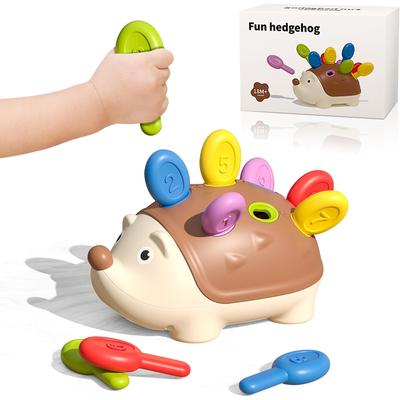
Tiny Tots Teens Trends Montessori Educational Toy, Hedgehog Fine Motor Skills, Toddler Counting, Sensory Development Montessori Educational Toy, Hedgehog Fine Motor Skills, Toddler Counting, Sensory DevelopmentHedgehog Montessori Educational Toy is a delightful and engaging learning tool designed to help toddlers develop essential fine motor skills, improve their concentration, and enhance sensory development. This toy promotes handson learning through...59,97 $*Shipping: 0,00 $Secure redirect to the provider
-
Playful Picks Montessori Hedgehog Color Sorting Educational Toddler Toy For Fine Motor Skills Development Montessori Hedgehog Color Sorting Educational Toddler Toy For Fine Motor Skills DevelopmentTurn early learning into a joyful daily adventure with a toy designed to spark curiosity and growth. The Montessori hedgehog toy is thoughtfully created for toddlers aged 13, helping them explore colors, counting, and coordination through handson...24,97 $*Shipping: 0,00 $Secure redirect to the provider
-
Learning Resources All About Me Family Counters Set of 72 - 72 Colorful Counters for Early Math Skills and Social Skills DevelopmentIntroducing the Learning Resources All About Me Family Counters Set of 72, a fun and educational tool designed to spark imagination and creativity in young learners. This vibrant set features a delightful array of family members, including parents, grandparents, and children, ideal for counting, sorting, and imaginative play. The set includes 72 colorful counters that are perfectly sized for little hands, making learning engaging and fun. The counters promote early math skills by encouraging counting, patterning, and sorting through playful activities. They also help develop social skills by fostering conversations about family dynamics and relationships. The All About Me Family Counters are suitable for a variety of settings, including home play, classroom activities, and birthday gifts. They are a great addition to any toy collection.18,19 £*Shipping: 3,95 £Secure redirect to the provider
-
Uplifted Trends Montessori Sensory Busy Board Educational Drawer Cube For Baby Skills Development pinkUnlock your childs potential with the 6 in 1 Montessori Sensory Busy Board! This interactive, handson toy is designed to enhance baby motor skills while keeping them engaged for hours. Perfect for both girls and boys, it features various fidget...39,97 $*Shipping: 0,00 $Secure redirect to the provider
-
What is signal transduction?
Signal transduction is the process by which cells convert extracellular signals into specific cellular responses. It involves a series of molecular events that relay the signal from the cell surface to the nucleus, where gene expression can be altered. This process is crucial for cells to respond appropriately to their environment and maintain homeostasis. Signal transduction pathways often involve the activation of protein kinases, second messengers, and transcription factors. **
-
Why is sensory transduction necessary?
Sensory transduction is necessary because it allows the body to convert various forms of environmental stimuli, such as light, sound, touch, and chemical signals, into electrical signals that can be interpreted by the nervous system. This process is essential for the body to perceive and respond to its surroundings, allowing for the detection of potential dangers, the regulation of bodily functions, and the experience of sensations such as taste, smell, and touch. Without sensory transduction, the body would not be able to effectively interact with its environment and respond to changes in its surroundings. **
-
What is transduction in the eye?
Transduction in the eye refers to the process by which light energy is converted into electrical signals that can be interpreted by the brain. This process occurs in the retina, where specialized cells called photoreceptors (rods and cones) capture light and convert it into electrical signals. These signals are then transmitted to the brain via the optic nerve, where they are processed and interpreted as visual information. **
-
How does the process of signal transduction proceed?
Signal transduction is a process by which a cell converts an extracellular signal into a specific cellular response. It typically involves a series of steps, starting with the binding of a signaling molecule to a receptor on the cell surface. This binding triggers a cascade of events inside the cell, often involving the activation of various proteins and second messengers. Ultimately, this leads to changes in gene expression, cell metabolism, or other cellular functions to produce the desired response to the initial signal. **
Similar search terms for Transduction
-
Youfap Market Montessori Wooden Shape Sorting Toy For Toddlers, Color Matching & Fine Motor Skills Development aGive your toddler a head start in learning with this Montessori wooden shape sorting toy. Designed for young learners, it helps build fine motor skills through colorful and interactive matching games. Perfect for kids ages 3 and up, this educational...64,97 $*Shipping: 0,00 $Secure redirect to the provider
-
Inspire Picks Interactive Giraffe Suction Cup Toy Multifunctional Sensory Learning And Motor Skills Development Toy whistleEncourage handson learning and playful discovery with this interactive giraffe toy designed for growing minds. Featuring a strong suction cup base, it easily attaches to smooth surfaces for stable, engaging play at home or on the go. Made from safe,...34,93 $*Shipping: 0,00 $Secure redirect to the provider
-
Tooky Toys Wooden Shape Sorter Barn - Toddler Toy for 3-4 Years - Fine Motor Skills DevelopmentWooden shape sorter barn designed for toddlers to practice spatial reasoning and fine motor control. Made from dense hardwood with sanded edges and low-VOC treatment. Includes chunky geometric blocks sized for small-hand grip strength. Each slot aligns with a specific block shape, reducing slippage. Smooth finish wipes clean after crayon marks or snack spills. Sturdy frame maintains integrity through stacking and drops. Reinforces visual discrimination and geometry vocabulary.11,08 £*Shipping: 3,95 £Secure redirect to the provider
-
Uplifted Trends Montessori Sensory Busy Board Educational Drawer Cube For Baby Skills Development greenUnlock your childs potential with the 6 in 1 Montessori Sensory Busy Board! This interactive, handson toy is designed to enhance baby motor skills while keeping them engaged for hours. Perfect for both girls and boys, it features various fidget...39,97 $*Shipping: 0,00 $Secure redirect to the provider
-
How can one explain signal transduction and signal transmission?
Signal transduction is the process by which a cell converts an extracellular signal into a specific cellular response. This process typically involves a series of molecular events, including the binding of a signaling molecule to a receptor on the cell surface, activation of intracellular signaling pathways, and ultimately leading to changes in gene expression, metabolism, or other cellular functions. Signal transmission, on the other hand, refers to the propagation of the signal from one cell to another, often through the release of signaling molecules such as hormones or neurotransmitters. Together, signal transduction and signal transmission allow cells to communicate with each other and coordinate their activities in response to external stimuli. **
-
What is the photo transduction in the dark current during illumination?
Photo transduction in the dark current during illumination refers to the process by which light activates photoreceptor cells in the retina. When light hits the photoreceptor cells, it triggers a cascade of biochemical reactions that ultimately lead to the hyperpolarization of the cell membrane. This hyperpolarization reduces the release of neurotransmitters, which in turn sends signals to the brain for visual processing. Overall, photo transduction in the dark current during illumination is a crucial step in converting light stimuli into neural signals for vision. **
-
What is the photo transduction in the dark current during exposure?
Photo transduction in the dark current during exposure refers to the process by which light-sensitive photoreceptor cells in the retina convert light stimuli into electrical signals. In the dark, photoreceptor cells are depolarized and continuously release neurotransmitters, which keeps the cells in a state of constant activity. When light hits the photoreceptor cells, it triggers a series of biochemical reactions that hyperpolarize the cells, reducing neurotransmitter release and signaling the presence of light to the brain. This process allows for the perception of light and the formation of visual images. **
-
What is the photo transduction in the dark current upon exposure to light?
In the dark current, photoreceptors are depolarized due to the constant influx of sodium ions. Upon exposure to light, photons are absorbed by the photopigments in the photoreceptor cells, leading to a series of biochemical reactions that ultimately result in the closure of sodium channels. This closure of sodium channels hyperpolarizes the cell, reducing the release of neurotransmitters and signaling the presence of light to the brain. **
* All prices are inclusive of VAT and, if applicable, plus shipping costs. The offer information is based on the details provided by the respective shop and is updated through automated processes. Real-time updates do not occur, so deviations can occur in individual cases. ** Note: Parts of this content were created by AI.